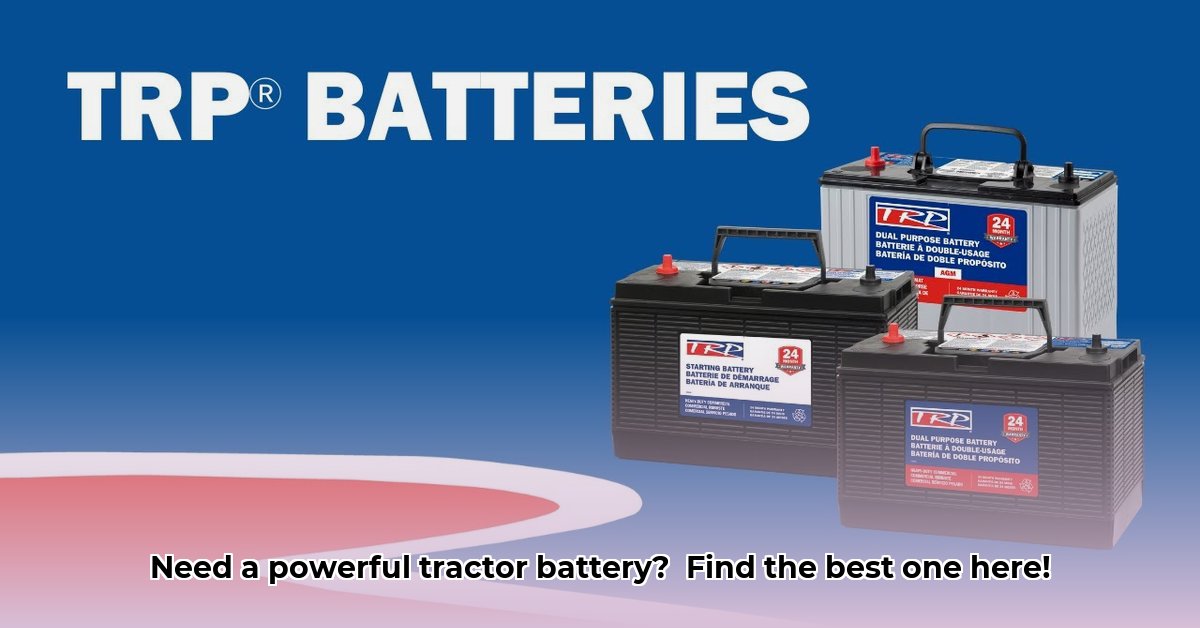
Your tractor's battery is critical for reliable operation. A dead battery means downtime, lost productivity, and potential financial setbacks. This comprehensive guide helps you choose the right Group 31 battery to keep your farm running smoothly. We'll compare popular options, explain essential technical details in plain language, and provide practical maintenance tips. Whether you're a seasoned farmer or a newcomer, this guide empowers you to make an informed purchasing decision. For more tractor resources, check out this helpful site.
Understanding Group 31 Tractor Batteries: A Deep Dive
Group 31 batteries are heavy-duty powerhouses designed for demanding applications like tractors. The "Group 31" designation refers to its standardized physical dimensions and terminal placement, ensuring compatibility with various tractors. These batteries are significantly larger than standard car batteries, providing the robust cranking power needed to start powerful engines, even in freezing temperatures.
Several key specifications determine a battery's performance and lifespan:
- Cold Cranking Amps (CCA): The amount of current a battery can deliver at 0°F (-18°C) for 30 seconds, crucial for cold-weather starts. (Higher is better).
- Cranking Amps (CA): Similar to CCA, but measured at a higher temperature (typically 32°F or 0°C).
- Reserve Capacity (RC): The number of minutes a fully charged battery can deliver 25 amps at 80°F (27°C). Indicates how long the battery can power accessories if the engine dies. (Higher is better).
- Warranty: The manufacturer's guarantee of performance and lifespan, reflecting their confidence in the product's quality.
- Maintenance Requirements: Some batteries are maintenance-free, while others (flooded lead-acid) require periodic fluid level checks.
- Battery Technology: Common types include Flooded Lead-Acid (FLA), Absorbent Glass Mat (AGM), and Lithium-ion. Each offers a different balance of cost, lifespan, and maintenance needs.
Comparing Top Group 31 Tractor Batteries: Super Start Fleet vs. Interstate TS-IB 31A
This section compares two popular Group 31 batteries: the Super Start Fleet and the Interstate TS-IB 31A. While detailed specs for the Super Start Fleet are available, information on the Interstate TS-IB 31A is limited. We strongly recommend checking the Interstate website or a reputable retailer for the most up-to-date information on this competitor.
Super Start Fleet: This battery is known for its robust construction, often employing a calcium-lead alloy for longer life and reduced maintenance. Its design often incorporates computer modeling to enhance vibration resistance, crucial for the demanding environment of farm work. It generally provides high CCA and CA ratings, ensuring reliable starts even in harsh conditions.
Interstate TS-IB 31A: To complete this comparison, you must locate the Interstate TS-IB 31A's CCA, CA, RC, warranty information, approximate price, and maintenance requirements from the manufacturer's website or a reliable retailer.
Here's a comparison table to help you organize your findings:
| Feature | Super Start Fleet (Example Values) | Interstate TS-IB 31A (Find from Manufacturer) |
|---|---|---|
| CCA | 950 | |
| CA | 1170 | |
| Reserve Capacity (RC) | 150 | |
| Warranty | 36 Months | |
| Price | (Check Retailer) | |
| Maintenance | Low/Maintenance-Free | |
| Battery Technology | (Check Manufacturer) |
Rhetorical Question: Considering the long-term cost of battery failure, isn't it worth investing in a battery with a strong warranty and proven reliability?
Maintaining Your Group 31 Tractor Battery: Prolonging Its Lifespan
Regular maintenance extends your battery's service life and prevents costly failures. Follow these essential steps:
- Monthly Visual Inspection: Check for corrosion on terminals (clean with a wire brush and baking soda solution), cracks in the casing, and low electrolyte levels (if applicable).
- Smart Charging: Use a smart charger to avoid overcharging, which damages the battery. Smart chargers regulate voltage and current to prevent harm.
- Proper Storage (for extended periods): Fully charge the battery and store it in a cool, dry place. A trickle charger can help maintain the charge.
- Troubleshooting: If you have starting problems, check connections and test voltage. Low voltage indicates a need for recharging or battery replacement. A load tester provides a more thorough assessment of the battery's health.
Quantifiable Fact: Regular maintenance can extend a battery's lifespan by up to 30%, saving you money in the long run.
The Smart Buyer's Guide: Choosing the Right Group 31 Battery
Price is a factor, but other considerations are equally important:
- Warranty: A longer warranty provides peace of mind and protects your investment.
- Brand Reputation: Established brands often offer higher quality and reliability.
- Availability of Replacement Parts: Easy access to replacement parts minimizes downtime.
- CCA/CA Ratings: Ensure the battery meets your tractor's power demands.
- Battery Technology: Consider the trade-offs between FLA, AGM, and Lithium-ion batteries.
Always consult your tractor's manual for the correct battery type and specifications. Research different models, read reviews, and compare specifications before making a purchase.
Powering Your Farm: Key Takeaways and Next Steps
Choosing the right Group 31 tractor battery is a crucial investment. By understanding key features, maintenance requirements, and available options, you can select a battery that maximizes your farm's productivity and reliability. Remember to consider your specific needs, usage patterns, and budget when making your decision.
Next Steps:
- Research specific models using the comparison table as a guide.
- Visit the manufacturers' websites for complete specifications.
- Read online reviews from other farmers to gather additional insights.
- Contact your local equipment supplier for advice.
Remember, the best battery for you depends on your individual needs and usage patterns. Happy farming!